Kodachrome

Paul Simon

Kodachrome

Paul Simon

A great song that is swimming around in my Juke Box Brain. Paul has managed to create ditties that are culturally relevant. Kodak announced back in the Seventies that it was going to discontinue the making of Kodachrome film. That was a big disappointment for shutter bugs just as the song sings the praises of the film stock. The resulting film quality was less than satisfactory if the camera operator wanted a high quality full color image using the available ektachrome film.. I was working on Polaroid commercials at that time and it was not a problem for their product, but for anyone shooting 35 mil it was the end of an era. Nice bright colors was one of the song lyrics but what we are allowed to see is not always reality. Technicolor was a casualty back in the Fifties. Just as audio suffered a reduction when digital became the industry standard. People still look for vinyl records since the sound quality is much better than CDs. But the quality of life is what is being diluted. Higher quality is no longer the goal.   

You Don't Own Me
 

Lesley Gore


Lesley Gore

When I woke up this morning my Juke Box Brain was already playing Leslie Gore’s hit song “You Don’t Own Me” Its been covered by a lot of women including Joan Jet among others. Quincy Jones produced the track and she gave him kudos for seeing the potential both political and culturally in the song written by John Madara and Dave White. This was the beginning of the women’s movement. I was in high school I witnessed young women identifying with the the song. Boys too. It is still resonant today.  

You Better find somebody to Love

Jefferson Airplane
 

You Better find somebody to Love
Jefferson Airplane    

Yesterday I woke up with Grace Slick wailing in my head, in front of an on-fire band. Jorma, Jack, Paul, Marty and Spencer on drums. This song is relentlessly confrontational and personally addresses the condition of  emotional dishonesty. A beginning time when women of power were speaking their minds. Jefferson Airplane signaled the end of an era; bands in uniforms were no longer viable. This is akin to a psychic enema. Psychotherapy disguised as a hit song. When LSD was introduced into the mainstream culture no one had any idea what the outcome would be. Casualties, but also breakthroughs long overdue involving evolution of human consciousness. Things haven’t gotten any better really. But the song has not lost any of its power. It has taken time for the concepts to be seriously regarded. The hope back then was that Love and the commensurate additives would assuage modern cultural isolation. This song forces people to reconsider their aloneness. Its exciting and I don’t mind that my Jukebox Brain has plucked it out of the deep folds of my cerebellum and forced me to witness its greatness all over again.

Welcome To My Blog

Welcome to my blog

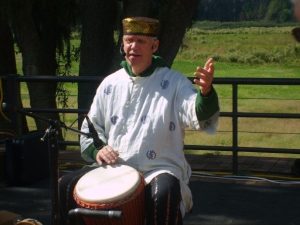
This will be a place for thoughts and conclusions. Now that I am seventy seven years old I suppose it is timely to pass on any wisdom I might have acquired on the way to this time in my life. I enjoy writing about music and philosophy with a sweet tooth for speculative fiction. I wrote the Star Wars syndicated comic strips back in the late 70’s. and several novels also books about drumming as a soul path.

Now that I am seventy six years old my mind is taking inventory all on its own initiative, so I wake up about 8:20 in the morning with a song going through my head like some AI sub routine; faithfully reproducing a song from my past just behind my eyeballs as if I were still behind the drumset.
This morning it is Robert Palmer singing: “You might as well face it you’re addicted to Love”
This was the beginning of chic blue eyed soul music. It was produced in England. America didn’t have the cultural equanimity to come out with such a slick production Plus Robert Palmer was a suave dude. He didn’t look like a typical rock star: he wore a dark suit with a white shirt and a fore-in-hand knotted tie like he was a corporate executive. His hair was perfect but there was still the air of rebellious spirit.
But the thing that really sold this song and sent it up the charts was the video. Specifically the women in the video. The all-woman band consisted of ultra hot European models that all dressed and appeared to be identical: tall with legs forever, pulled back hair so tight it made their perfect faces taught with restrained passion. They all moved together even though it was obvious they were not really playing their respective instruments. It was the typical set up; Drums, Bass, Guitar, Keyboards and Robert up front with a microphone on a stand and his professional look.
They were thin and emotionless as they went through the motions of swaying back in forth in unison but not together like traditional groups. They were unattached in their own individual worlds while the song cooked in this nasty but polished groove. Robert didn’t have to acknowledge the women. He didn’t really even look at them.
It spoke of a time of sensuality grown up, looking for its equal on the world stage. Hot and sophisticated. Not yet New Age, definitely not punk but an aloof ethic that was more seductive than any other song on the charts. I could go on like Lester Bangs at Creem magazine but the thing that hit me was the chemistry of their skimpy minimalist tube dresses, The material was black and sheer. So sheer that as they moved in their disinterested lasciviousness, their private torsos were betrayed by the bright rock video lighting. They all looked identical too.
The song was good; a first class mix. But the women sold the video. It was beginning of pulp rock and it really worked. So today that is what I am listening to in my Juke box of a brain.

In Memory of Elizabeth Reed

The Allman Brothers will always have a place of honor in my JukeBox Brain. My band Bethlehem Asylum was fortunate enough to open for the original Allmans on numerous occasions in the South when we were all getting started. The cemetery in Macon, Georgia was hallowed ground. Elizabeth Reed’s headstone marked a spiritual commitment to the music. The shimmering guitar duets accompanied by Gregg’s masterful vocals and B3 organ playing, Jaimo and Butch’s unstoppable drumming, Berry’s inspired Bass, celestial slide guitar of Duane and Dicky’s melodic inspiration testified to the fact that they were the greatest blues band in the world. But their arrangements were more classical then merely one chord, four chord and five chord. Duane played Coltrane’s “Love Supreme” in his slide delectations. Witnessing them was a high psychic plateau of creativity that I will always cherish in my Jukebox
brain.

Blog

You Better find somebody to Love
Jefferson Airplane

Yesterday I woke up with Grace Slick wailing in my head, in front of an on-fire band. Jorma, Jack, Paul, Marty and Spencer on drums. This song is relentlessly confrontational and personally addresses the condition of emotional dishonesty. A beginning time when women of power were speaking their minds. Jefferson Airplane signaled the end of an era; bands in uniforms were no longer viable. This is akin to a psychic enema. Psychotherapy disguised as a hit song. When LSD was introduced into the mainstream culture no one had any idea what the outcome would be. Casualties, but also breakthroughs long overdue involving evolution of human consciousness. Things haven’t gotten any better really. But the song has not lost any of its power. It has taken time for the concepts to be seriously regarded. The hope back then was that Love and the commensurate additives would assuage modern cultural isolation. This song forces people to reconsider their aloneness. Its exciting and I don’t mind that my Jukebox Brain has plucked it out of the deep folds of my cerebellum and forced me to witness its greatness all over again.

Hey Mr. Tambourine Man

I first heard this song in high school down in Clearwater, Florida 1966, It felt like a call from a distant mystical land where the music was magical. Of course that interpretation changed once I did get out on the road but the seductive call of that song never left me. It was a way of living in the possibilities of youth. It is playing in my juke box brain and still calls out to me like the pied piper it was back then. Now it is a dangerous calling like a siren from the dangerous deep. After all this time; two hip replacements and all the pain and enlightenment of a lifetime it still calls out to me promising love and excitement that could never be fulfilled but still it is a great song and a testament to what a simple song can do to us.

Fame

David Bowie and John Lennon cowrote this funky hit tune. The groove imitates an original R and B groove maybe from Otis Redding or James Brown. But it has a luster all its own. Lots of angst too. The posturing to avoid fame and glory is appreciated. They are some of the first rock stars to lament what is lost when the song tops the charts. The long slog of paying the manager and lawyer bills with exorbitant concert ticket pricing takes over where there was once simple joy. Years after the huzzah’s have died down the accountants tally up and deliver the bad news that the rock star owes more than they have made minus what the lawyers have stolen is a sobering realization. But the player has no choice but to continue playing, the band goes down with the Titanic. But hey what else can we do but dance? Enjoying the mysterious miracle of music and what it does to our soul is the payback. The guitar lick imitates a Memphis horn line. My JukeBox Brain is hung up on it. Can’t leave it alone. Repeating the phrase like it was foreplay underscoring the original impetus of groove as dance. You don’t have to know anything about moving. I watched Bowie lip synch this on Don Cornelius’ Soul Train and he made it work. What a pro. Would have been nice to witness it with John onboard. Fame, I’ll reject you first…indeed.

I Don’t Like Mondays

Bob Geldof wrote the song in response to a grade school massacre in Southern California back in the eighties. It was a shocking event and the first of many mass shootings in schools. Punk Music was reaching its ascendancy as a marketable commodity and Bob wanted to make a statement. The song was a melancholy lament by a young voice about not liking Mondays. Its was a bittersweet quote attributed to the young girl who was responsible for the atrocity in the school. It was almost funny, if it weren’t so heartbreaking. The song was actually beautiful and confounding in its appeal. It was a harbinger of events like it. Bob redeemed himself soon after by hosting the first Live AID concert in London and simultaneously in New York with drummer Phil Collins appearing live in both venues via his commuting flights on the supersonic Concord jet. Bob’s band, the Boomtown Rats had a level of success. Today is Monday and this tune with its melodious lament is stuck in my JukeBox Brain. I apologize if it offends. No intention of getting a cheap laugh.Gimme Shelter
Rolling Stones nailed the zeitgeist of America back in the Seventies with this song just after the shocking violence at Altamont. The real high point of the song is Mary Clayton’s vocal performance. She put her whole heart and soul into her call and response blending the urgency of a street fight with a Gospel witnessing. It is stuck in my JukeBox Brain for a number of current cultural reasons. Mary reminds us what is good even in adversity. I first witnessed The Stones on their first American tour in the mid Sixties in Clearwater’s Jack Russell stadium. Seems their music gave permission for bad behavior from the get go. The good ol’ boys back then stormed onto the baseball field during only their third song; “Little Red Rooster” giving the CPD cue to shut the concert down. They were whisked off in a limo to their hotel in downtown Clearwater , the Jack Tarr Harrison, which later became headquarters for a science fiction religion. Next day in Clearwater high school the only artifacts were polaroids of Bill Wyman and Brian Jones asleep in their respective hotel room beds taken by our local girl fans who snuck into the Stone’s inner sanctum. The after thought is significant though. Keith later remarked that he woke up in the middle of that night to record a snippet of a song, a distorted guitar lick, then he returned to slumber land only to discover the next day that he had set the groundwork for their biggest hit; “Can’t get no Satisfaction” which could be construed as a critical observation of life in America, or in Clearwater, Florida or right now.

Leave a Reply

Your email address will not be published. Required fields are marked *

This field is mandatory

This field is mandatory

This field is mandatory

There was an error submitting your message. Please try again.

Security Check

Invalid Captcha code. Try again.

Super Freak
 

Super Freak

Written by Alonzo Miller and Rick James recorded by Rick James up in Sausalito close to the houseboat I was living in at the Record Plant then down at Motown family in L.A.with some of theTemptations singing back up. It was what he called a Punk Funk composition. But it was also a women’s rights song. Political in its own right celebrating a woman who was outspoken in her feminine power. Even if she is on the street. “The kind you don’t take home to mother” has got to be one of the nastiest most honestly funny lyrics in R&B. Rick was an all round musician playing a lot of the parts himself, But rooted in the groove with bass playing by Oscar Alston. His voice spoke for a lot of disenfranchised people even though he wasn’t that impressed with the song. He said OK coz he thought the white people could dance to it. He was from Buffalo, New York. My JukeBox brain is looping on his hook like it was the last hot lick in the world. Maybe it is,


 Little Old Lady From Pasadena

Apologies for bringing this song up. My Juke Box Brain makes no distinction as to the quality of its retrieval system. It is swimming around in my head on its own recognizance. Jan and Dean had a hit with this song in about 1966, It was a shameless take on the American teen car culture. If a person was in the market for a used car. The salesman would use the standard joke that the car had been driven by a little old lady from Pasadena even though in reality the used car had been driven into the ground and left for dead. It was a romance of infinite possibilities and the birth of street racing. Detroit steel ruled. The muscle car was the royal coach. We were a nation of unquestionable power, superiority and style. Even a little old lady could burn rubber. That era is what we long for often. It was real but times change and Japanese small cars took over the markets. Our self confidence suffered a dent in the fender but continued to smoke the tires and push the redline on RPMs. We have had a good run. But it’s difficult to forget the Saturday nights in the backseat with your date at the drive in movies. We were sold a Bill of Goods that is barely sustainable. My self identity was defined and caught up in Detroit’s fantasy of the fast car and cheap gas. Even though I drove an English MG two seater sports job. The engine roar is being replaced with a humming electric engine that is almost silent even though I miss the deafening power of a V8 under the hood.
 

I Don’t Like Mondays

Bob Geldof wrote the song in response to a grade school massacre in Southern California back in the eighties. It was a shocking event and the first of many mass shootings in schools. Punk Music was reaching its ascendancy as a marketable commodity and Bob wanted to make a statement. The song was a melancholy lament by a young voice about not liking Mondays. Its was a bittersweet quote attributed to the young girl who was responsible for the atrocity in the school. It was almost funny, if it weren’t so heartbreaking. The song was actually beautiful and confounding in its appeal. It was a harbinger of events like it. Bob redeemed himself soon after by hosting the first Live AID concert in London and simultaneously in New York with drummer Phil Collins appearing live in both venues via his commuting flights on the supersonic Concord jet. Bob’s band, the Boomtown Rats had a level of success. Today is Monday and this tune with its melodious lament is stuck in my JukeBox Brain. I apologize if it offends. No intention of getting a cheap laugh. 

AeroSmith and also Run DMC

Walk This Way

Walk This Way

Written by Joe Perry and Steven Tyler based on a lick Perry came up with during an Aerosmith sound check in Hawaii. My JukeBox Brain glommed onto it and almost ruined the rest of my day, I gotta respect the fact that it was a hit both as heavy rock and also Rap which was an unexpected breakthrough for Run DMC and Aerosmith. Notorious lead singer Steven Tyler sewed his wild oats and the result was a child mothered by mode/l scenester Bebe Buell.  Once I was recruited to distract fans from Dead Boys punk lead singer Stiv Bators that included fielding a phone call from Bebe Buell. He waved; “don’t tell her I’m here!” on their stayover at the Continental Hyatt riot house on Sunset Blvd. When the daughter reached a certain age, Liv noticed that she did not resemble her reputed father Todd Rundgren. Todd is a stand up guy and honorable father figure but they did not tell Liv their secret until the daughter looked in the mirror then at her bedroom wall poster of Aerosmtih and noticed that she had more than a passing resemblance to lead singer Steven Tyler. Bebe and Todd had to fess up to the masquerade. All was forgiven and Steven and daughter Liv developed their relationship. Todd eventually went out on tour with Daryl Hall minus John Oates.That is a back story fitting rock royalty with enough dropped names to fortify your day. Walk This Way phrase originated from "Young Frankenstein" movie spoken by a hilarious Marty Feldman.Walk This Way

.

GoodTime Charlie's got the Blues

Jim Croce


GoodTime Charlie’s Got the Blues

Danny O’Keefe wrote it and Jim Croce had a hit with it. He died the next year when his Nachitochis Airlines crashed hitting a Pecan tree at the end of the runway in Shreveport killing all on board including his bandmates. I was scheduled to leave L.A. the next week for a tour with Tim Buckley and we were booked on the same airlines. I voiced my concerns to the head Secretary at Bizarre Straight records. Book us on a another airline! She didn’t blink and told me that I was “Afraid of success.” I guess she was right there. Tim Buckley died in 1975. Jim had been infantry in Nam. Much like Viet Nam attitude at that time. Sometimes you win, sometimes you go down and your songs go up the charts. His label released “I Got a Name” the next day and it went to the top ten. Music is a goulish business. Sweet wife and son. His last letter, unsent, promised that he would stay at home to be with his family. My JukeBox brain won’t leave it alone.

Gimme Shelter

Rolling Stones

Gimme Shelter
Rolling Stones nailed the zeitgeist of America back in the Seventies with this song just after the shocking violence at Altamont. The real high point of the song is Mary Clayton’s vocal performance. She put her whole heart and soul into her call and response blending the urgency of a street fight with a Gospel witnessing. It is stuck in my JukeBox Brain for a number of current cultural reasons. Mary reminds us what is good even in adversity. I first witnessed The Stones on their first American tour in the mid Sixties in Clearwater’s Jack Russell stadium. Seems their music gave permission for bad behavior from the get go. The good ol’ boys back then stormed onto the baseball field during only their third song; “Little Red Rooster” giving the CPD cue to shut the concert down. They were whisked off in a limo to their hotel in downtown Clearwater, the Jack Tarr Harrison Hotel, which later became headquarters for a science fiction religion. Next day in Clearwater high school the only artifacts were polaroids of Bill Wyman and Brian Jones asleep in their respective hotel room beds taken by our local girl fans who snuck into the Stone’s inner sanctum. The after thought is significant though. Keith later remarked that he woke up in the middle of that night to record a snippet of a song, a distorted guitar lick, then he returned to slumber land only to discover the next day that he had set the groundwork for their biggest hit; “Can’t get no Satisfaction” which could be construed as a critical observation of life in America, or in Clearwater, Florida or right now..Gimme Shelter
Rolling Stones nailed the zeitgeist of America back in the Seventies with this song just after the shocking violence at Altamont. The real high point of the song is Mary Clayton’s vocal performance. She put her whole heart and soul into her call and response blending the urgency of a street fight with a Gospel witnessing. It is stuck in my JukeBox Brain for a number of current cultural reasons. Mary reminds us what is good even in adversity. I first witnessed The Stones on their first American tour in the mid Sixties in Clearwater’s Jack Russell stadium. Seems their music gave permission for bad behavior from the get go. The good ol’ boys back then stormed onto the baseball field during only their third song; “Little Red Rooster” giving the CPD cue to shut the concert down. They were whisked off in a limo to their hotel in downtown Clearwater , the Jack Tarr Harrison, which later became headquarters for a science fiction religion. Next day in Clearwater high school the only artifacts were polaroids of Bill Wyman and Brian Jones asleep in their respective hotel room beds taken by our local girl fans who snuck into the Stone’s inner sanctum. The after thought is significant though. Keith later remarked that he woke up in the middle of that night to record a snippet of a song, a distorted guitar lick, then he returned to slumber land only to discover the next day that he had set the groundwork for their biggest hit; “Can’t get no Satisfaction” which could be construed as a critical observation of life in America, or in Clearwater, Florida or right now.

The Kinks

Lola
 

Ray Davies and the Kinks had a hit with this song. It was one of their sly commentaries on modern life. There was some consternation once people found out what the song was about but music critics overwhelmingly liked the song. It was maybe the first song about transgenders. Ray Davies and his brother in the Kinks have been a pervasive influence on rock n roll music while keeping it lightweight at the same time. They recently asked Elon Musk to change the algo on the internet because it automatically restricted people searching for the Kinks music designating the band’s name as suspect. It popped up in my JukeBox brain when a friend of ours named her poodle “Lola”. So as a result I am listening to the playback in my head for a prolonged repeated cycle. No worries. Its a groovy  song and The Kinks will always be one of my faves conjuring swinging London of the Sixti

Dr. Hook's Medicine Show

On the Cover of the Rolling Stone
 

On the Cover of the Rolling Stone

Written by Shel Silverstein and recorded by Dr, Hook’s Medicine Show. My JukeBox Brain gleefully kept repeating the refrain of the song while I was waking up. Shel was a tremendously talented multi media artist. His children’s books are still popular. His drawings were an enjoyable addition to  the magazines of the sixties. He lived in a retired steel hulled ship in Sausalito Bay where he hosted many memorable events including concerts by Dr. Hook. He graciously invited me into the recording studio in San Francisco for his finishing mixes on this song. I could tell it was a hit. I had met him in Coconut Grove in Miami with Charmaine, a local radio DJ personality. He came to visit my girlfriend early in the morning while we were  just getting up after a fun birthday party where my girlfriend was gifted with a carafe of sangria laced with LSD. Not really wanting to drink any of the dangerous beverage, we placed it in the refrigerator. The next morning Shel and his friend said good bye and slipped out through the kitchen door leaving us to wake up on our own. An hour passed and the phone rang. It was Shel calling from somewhere in Miami. They had each taken a sip of the sangria on their way out of the kitchen and were now feeling the effects of the hallucinogen. They were fine but surprised. The song soon followed and I reconnected with him in Sausalito, California. 
 

Mr. Tambourine Man

Bob Dylan


Hey Mr. Tambourine Man

I first heard this song in high school down in Clearwater, Florida 1966, It felt like a call from a distant mystical land where the music was magical. Of course that interpretation changed once I did get out on the road but the seductive call of that song never left me. It was a way of living in the possibilities of youth. It is playing in my juke box brain and still calls out to me like the pied piper it was back then. Now it is a dangerous calling like a siren from the dangerous deep. After all this time; two hip replacements and all the pain and enlightenment of a lifetime it still calls out to me promising love and excitement that could never be fulfilled but still it is a great song and a testament to what a simple song can do to us.


Up Up and Away in My Beautiful Balloon

The Fifth Dimension

Up up and away My beautiful balloon

The Fifth Dimension had a massive hit with this song. It is unapologetically optimistic just like the rest of their catalogue of songs. Marilyn McGoo is a great pop singer. They came out of the  L.A. music scene with a few members from St. Louis in the Sixties first on Johnny Rivers label Soul City. They endured criticism that they didn’t sound black enough but their appeal was universal. I have them gleefully performing in my mental JukeBox brain. I don’t mind it too much. Once again the Wrecking Crew is providing their background musical support with Hal Blaine on drums for most of their hit songs. They performed at Nixon’s White House several times which goes to show that music can transcend partisan politics.

Wah-Watusi

The Orlons


 Wah-Watusi

Penned by Kai Mann and Dave Appell in 1962. My JukeBox brain is digging into my preteen memory and replaying this tune on repeat until I want to scream or maybe dance. Recorded by the Orlons. Was that a synthetic fabric? Dick Clark American Bandstand featured the song where the Phillie kids voted on it. My high school band, Those Five, played at a Dick Clark’s “Where the Action Is” a few years later. We all towered over Dick. I realized he needed that podium to level up. He never aged. Almost creepy. He remarked that we did not wear matching outfits. Beginning of a new age in culture. Watching the girls in that era doing the Watusi was a moving experience and was a good workout. Better than Pilates and more fun. I have no idea how authentic the dance moves were. Any kind of movement was good for the soul. Hula hoops too. Bobbie sox on the polished basketball court floor. Poodle skirts and “virgin pins” Hormones running wild and no one heard of Viet Nam yet. Music and dance are eternal.


Needles and Pins

The Searchers

Needles and Pins
The Searchers had a hit in the Sixties, originally recorded by Jackie Deshannon in the early Sixties, later covered by the Ramones, Dave Clark Five and others. Written by Sonny Bono and Jack Nietzche. A killer in any era. A complex love story.  Deceptively simple sounding but every great song tells a story. The jangley guitar is a singular hook. The Mersey beat. Great chorus. One of the great ear wigs, I don’t mind it taking over my Juke Box Brain. Sounds a lot like the Everly Brothers. It flashes me back to playing it at Surfer’s Club in the Sixties. Ah youth! 


Fame

David Bowie John Lennon
 

Fame

David Bowie and John Lennon cowrote this funky hit tune. The groove imitates an original R and B groove maybe from Otis Redding or James Brown. But it has a luster all its own. Lots of angst too. The posturing to avoid fame and glory is appreciated. They are some of the first rock stars to lament what is lost when the song tops the charts. The long slog of paying the manager and lawyer bills with exorbitant concert ticket pricing takes over where there was once simple joy. Years after the huzzah’s have died down the accountants tally up and deliver the bad news that the rock star owes more than they have made minus what the lawyers have stolen is a sobering realization. But the player has no choice but to continue playing, the band goes down with the Titanic. But hey what else can we do but dance? Enjoying the mysterious miracle of music and what it does to our soul is the payback. The guitar lick imitates a Memphis horn line. My JukeBox Brain is hung up on it. Can’t leave it alone. Repeating the phrase like it was foreplay underscoring the original impetus of groove as dance. You don’t have to know anything about moving. I watched Bowie lip synch this on Don Cornelius’ Soul Train and he made it work. What a pro. Would have been nice to witness it with John onboard. Fame, I’ll reject you first…indeed.

Goldfinger

Shirley Bassey

GoldFinger
Shirley Bassey sang the song on the movie soundtrack and hasn’t been topped by any other artist. Composed and arranged by John Barry, lyrics by Leslie Bricusse and Anthony Newley, But the highlight of the movie was Honor Blackman as Pussy Galore. Honor just passed. Quite the fem fatale and “impervious” to James Bond’s romantic charms because it was implied that she liked girls instead of boys. When I was a teenager this subtly flew right over my head, even having read the original book by Ian Fleming, This detail may have been the first hint of what was to come in terms of our social changes. This song will not leave my head alone. I think its a great song and would love to take a stab at recording it again with newer instrumentation. Supposedly Pussy Galor’s character was based on an acrobat women who was actually Ian Flemings intended fiance.

You are Just the Girl for Me

An AI dream

You're Just the Girl For Me

My Time Travel Bedroom came to me after listening to vintage Sixties music in my head. Listening to Music Machine’s “Talk Talk” and other tunes preserved in my JukeBox Brain created a warp in the time continuum that gave me a portal into the era starting around 1964. The tempo of that particular song in conjunction with active Ai made a happy accident that was a wish come true. My bedroom became like a clothing store on Carnaby Street. Mobiles with eyeballs hung from my ceiling and my closet held platform shoes and zip up Wellington boots. On my nightstand was my phonebook intact with numbers. I called the girl that had been my date on Senior night and she answered the phone. She was still living in the same house. She came right over and as she stepped into my bedroom she was transformed into a  Mary Quant original like Twiggy. We were both living a dream but it was real. The Ai wanted to be there as much as we did.
The house I had grown up in had gone through various family ownerships and I was notified that it was now in my possession. 
Bedrooms were intact. I pulled out my Nehru jacket from the closet and tried it on. It fit. In the pocket were two ticket stubs to Jimi Hendrix. She remembered the concert. I felt like I was sixteen and she looked it too. The aches and pains of old age were gone. The Ai was doing its magic. What should we do; keep it a secret or let the whole world know? 
We decided to take a drive down to the beach. The radio in my car played only hits from our high school years. Procol Harem and 
Yardbirds filled the air. We arrived at the motel we had stayed in on our Senior night stay over and got a room. The woman behind the counter could have been the same woman who had checked me in secretly avoiding the fact that I would have a girl staying with me. The beach was not crowded. It was off season, but it felt like everywhere we went the Ai manipulated reality to reproduce 1965. My hair grew back and the grey went away. Mary’s body tightened up and her glasses weren’t needed. We didn’t care if we were dreaming.The music carried us back. We had our old authority back. She was a dominant happy young woman and I was her gallant gentleman. Life was good again.

Chuck E's In Love

Rickie Lee Jones

Chuck E’s In Love

Rickie Lee Jones penned this great song back in the Seventies and it still holds up. I met Chuck E. Weiss one night in Sherman Oaks at John Herron’s telling  how he met Tom Waits at an open mic where 
Tom sang folk songs; “Five hundred miles” he imitated this milktoast valley kid with some level of scorn, but then Chuck said the next week at the open mic Tom now sounded like an aged jazz musician from New Orleans. “He stole my whole routine!” Chuck exclaimed. Chuck had come to L.A. from New Orleans and was a gifted second line-drummer and overall great player. He had a run of success with a club band called “The Goddam Liars” He was a real character. 
 

Woodstock

Joni Mitchell

Woodstock

Joni Mitchel wrote the song without even going to the first and only Real Woodstock festival. Most people who were alive then and still above ground now have a memory of the first time they heard Joni’s lilting yet haunting song. I was in Key West playing at “The Great Escape Lounge” a night club in the Key West Airport which closed at sunset everyday then Dieter, a West German National and his Miami Beach JAP wife would open the club while constantly arguing with each other about the decor in their small club that catered to the secretive denizen of the night around the desolate airstrip. The lights were off in the airport terminal, the old African American gentleman swept the terrazzo floor like he had done for eons as the strangest people appeared out of the jungle, and the nighttime air. Our band had a horn section as well as the rhythm section, let by Christian, a jazz genius piano player originally from Jairpur, India by way of Harlem. We had worked up an arrangement of Joni’s song and were giving it a go. My drumset positioned at the rear of the bandstand gave me an unobstructed view of the unlit tarmac landing strip. As we played through the song, I glanced out of the fifties slanted picture windows and watched a piper cub float down out of the night sky. No lights. It landed, and an old Ford station wagon surreptitiously approached out of the dark jungle foliage, stopping next to the piper cub. The doors opened on both vehicles and night business was conducted discretely. 
By the end of the song their transactions were done and the plane slipped back up into the night sky and the station wagon went on its way. Such is the business of Key West. Standing in the humid night air during our break a drunk patron sidled up to me complimenting my playing and asked my name which I provided to him. He then mentioned that his boss had the same last name as me and were we related. I told him that we were distantly related. I asked about his vocation and he replied that the he was a pilot, having come to the Caribbean to develop new business partnerships. I surmised he was flying for Air America which surprised him. “That’s not public knowledge he murmured. “It is if you want to know.” I returned inside the Great Escape lounge bandstand for our last set.

Sunshine of Your Love

Creem
 

Sunshine of Your Love

Cream was a famous trio of English musicians who liked to play real loud. The Marshall Stack was a new addition to the arsenal of hard rock. Two cabinets stacked up towered over the player at eight feet tall. Ginger Baker the drummer and creator of the band used two big bass drums and a phalanx of tom toms and cymbals to match the lethal volume of Eric Clapton on lead guitar and Jack Bruce on thundering bass and lead vocals. When Jack Bruce was much younger studying bass, his professor gave him a discouraging prognosis stating that Jack would never amount to anything in the world of music. Best to give it up and sell fish on the wharf, but Jack persisted and ended up writing some great songs; “It’s getting near dawn when night close its tired eyes. I’ll soon be with you my love and give you my dose of pride.” Some of my favorite lyrics from mid 60’s. I drove a carful of high school friends down to Miami to witness 
Cream live and it was spectacular. Eric admitted later that during his guitar solos he would switch on a couple of extra Marshall speaker cabinets to give him more volume. Jack composed the song growing out of a phrase he came up with on upright bass. Which was sacrilegious back then. But when I spied  a sweet picture of Jack with his smiling wife my autoload jukebox brain faithfully brought up Cream to drive me crazy like a pile driver on too much coffee. Ginger turned the beat around accenting the One beat and the Three beat instead of the usual rock two and four beat pattern. It gave the song a Neanderthal presence. This was the middle of the psychedelic era of human consciousness. Timothy Leary was active and LSD was becoming available and abused. Thank science for injecting it into the bloodstream of America and the world. Although it did kick start what Robert Heinlein called a “False Renaissance”


Lookin' for the heart of Saturday Night

Tom Waits
 

Lookin for the Heart of Saturday Night

Tom Waits’ first album. It was a song I loved and should have covered it with Tim Buckley, they were on the same label. I was unsure of my producing chops. Don’t ever doubt yourself when it comes to being creative. No one will know how unsure you were. This song is plaintiff. It is wistful about the endless search for romance. Tom Waits is a great talent and a perceptive poet. And he is funny too. When I was drumming with Tim Buckley in the early 70’s we were touring and recording and I felt that I had found a home. Then Tim died and I was without someone to play drums for. He had an amazing voice but we play the cards we are dealt. Tom sums sums up that forlorn emptiness in this song. It is a hit that never made it.

Like a Rhinestone Cowboy

Glen Campbell

Like a Rhinestone Cowboy

Glenn Campbell, Leon Russell and the rest of Hal Blaine’s Wrecking Crew were anonymously responsible for almost all the hit records in the 60’s and early 70’s. My JukeBox Brain insisted on planting this Glenn Campbell massive hit song in my frontal lobes at 3 AM and I cannot get rid of it. I do not resent Mr. Campbell his success. He was a brilliant all around player and composer/arranger. And a really nice guy. I knew a group of pickers from Oklahoma who hung out with Glenn and emulated his talent. Good Luck with that. He was one of a kind. My first sojourn into the recording world in L.A.took place a mere week after arriving in tinsel town. Cutting an album by on old friend from Coconut Grove, Miami. Vince Martin. He was a folkie celebrity having cut “Tear Down the Walls” with immortal baritone, Fred Neil, also from the Grove. Vince had a hit with “Cindy, oh Cindy" back in the late 50’s .He still had his chops and invited me along to play on his tracks in the belly of the Capitol Records beast on Vine Street in the building that looks like a stack of 45s. Reeking with history I wandered the basement rooms in the middle of the night watching the masters at work cutting acetates of Beatles albums. I chanced upon a session in progress in cavernous studio A with Glenn Campbell and Steve Goodman cutting their guitar version of Dueling Banjos. A notoriously tricky instrumental Appalachian tune from the movie, “Deliverance.” Glenn was in his element, smiling, keeping it light weight while Steve, no slouch himself, was sweating bullets. Take after take ground to a halt after Steve would hit a clam during his solos. “We can fix it in the Mix” Glenn joked. An impossible feat with a song florid with arpeggios. I left them to their Sisyphean task and went back in studio B where the Beatles had cut many tracks and Vince was laboring on his originals backed up by a first rate group of musical mercenaries; Van Dyke Parks was picking out melodies on marimba like picking daisies, Joni’s husband on bass loved the way I played and offered to start a band with me. The engineer had one comment, “Hal Blaine can’t even do that” when remarking on my steady time. All seemed good but I soon heard from my Okie friends a remark they attributed to Glenn Campbell when asking him what was it like to “Really Make It” in the music business? His answer; “You never really Make It.” I tried to remember that answer.

Information icon

We need your consent to load the translations

We use a third-party service to translate the website content that may collect data about your activity. Please review the details in the privacy policy and accept the service to view the translations.